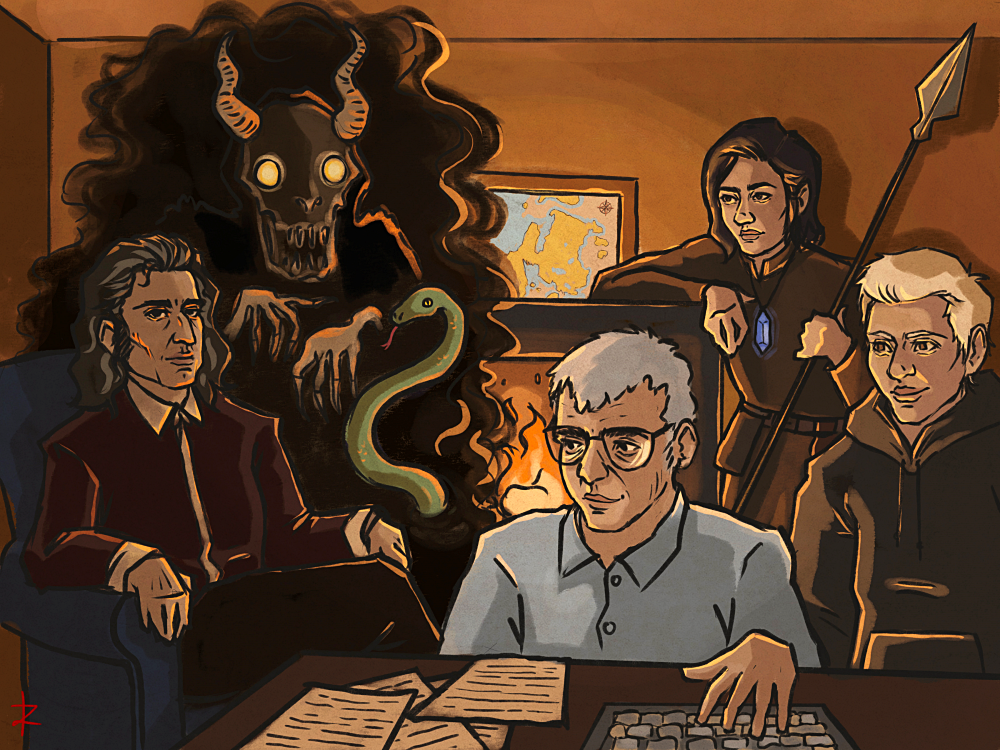

Sometime during the past few days, as I write this, my words are being or have been read out at a poetry festival. This is not something that occurs for me often. In fact, virtually never.
But wait. Are they really my words being read out? That’s a fertile subject for discussion.
You see, I have this friend. I met him years ago when I was making my way home from a year’s study in Chile and found myself with several hours to kill during a layover in Lima. Through a series of events too complicated to go into right now, I wound up being invited to his family’s home for Sunday dinner and to pass the time until my evening flight to Los Angeles. Despite a significant gap in our ages, Mañuco (as he was called within the family) and I hit it off and formed a friendship that has endured through decades, marriages, parenthood and international relocations. He has lived many years in Paris, while I have dwelled these past score of years in rural Ireland. He is a poet, designer, dancer, all-around artist and general purveyor of Peruvian culture in the City of Lights.
If his name rings a bell with my readers, it is probably because he was one of the people to whom I dedicated my very first novel. And in case you are about to ask, no, he is not Antonio, the young traveling companion of Dallas and Lonnie in Maximilian and Carlotta Are Dead whose presence also weighs heavily in the two subsequent novels. Of course, any insights I gained from having a friend from a different (specifically, Latin American) culture informed the fictional character, but Antonio himself was more directly inspired by various Mexican and Mexican-American friends and acquaintances I had in my younger days. Still, the long-lasting bond between Dallas and Antonio does echo that of Mañuco and myself.
My Paris-based friend has always been a spinner of poems, and he has always written them in his native Peruvian Spanish. For years he has submitted them to various academic and literary journals. Many of these journals require works submitted in languages other than English to be accompanied by an English translation. At some point he asked me to translate one of his poems, and always up for a challenge, I gave it a go. He was delighted with the result and happily submitted it along with the original version. Since then, these requests have become a somewhat regular thing.
To be sure, I undertook this job with no small amount of trepidation. For one thing, I am not trained as a translator. My Spanish is pretty good (if I do say so myself), but translation is a whole different skill from simply understanding and communicating in a foreign language. Translation requires a specialized sort of training. Furthermore, I can in no way be considered a poet. I do read and appreciate poetry and have even churned out the odd bit of doggerel when the occasion required, but I am totally ill-equipped to write serious poetry of my own.
Despite this, I willingly produce translations of Mañuco’s poems because, for one thing, he is happy with and grateful for them. For another thing, it just seems to work because of the long and unusual mental bond between him and me. It’s a wondrous thing, as he and I are products of such different cultures, are native speakers of different languages, are different ages, and have actually spent precious little time in each other’s company. The vast majority of our communication has been through letters and, later, emails and internet audio conversations. Despite all this, when I read his poetry, I have some kind innate understanding of what he’s thinking, something he himself confirms. I do have to do a lot of research, sometimes painstakingly word by word, to find the right words or phrases, but only rarely do I have to consult Mañuco directly about his intentions or nuances. I doubt I could do the same for any other writer.
Part of the challenge of Mañuco’s poetry for a translator is that is tends toward themes of nature, earthiness and ribaldry along with a serious dose of surrealism. He tells me that my translations are invariably well received, although once he delighted in telling me a submission resulted in feedback that went roughly like this: your poem is pornography, and your translator is even more pornographic than you. It was never made clear to me whether this was contained in a letter of rejection or acceptance.
From Mañuco’s point of view at least, the old Italian aphorism traduttore, traditore (translator, betrayer) does not apply. He insists my translations make me a poet in my own right. Personally, I’m not so sure about that. Translation is definitely an art, but I’m not convinced that the translation of poetry is itself a form of poetry. I confess, though, I don’t mind the flattery.
Poetry or not, though, my English version of Mañuco’s words are being read aloud this weekend—along with the original Spanish words—at the inaugural edition of La Tour Poétique organized by the Association Apulivre in Paris. Hopefully, no fastidious listeners will be offended.
I’m definitely more comfortable with prose. And speaking of prose, allow me again to thank those of you who have purchased and read Last of the Tuath Dé. While the sales numbers certainly pose no competitive threat to the likes of James Patterson and J.K. Rowling, I’ve been gratified by the numbers of people who have sought out the book at the various online stores. I’ve been particularly impressed by the numbers of people who have gone to the expense of buying the paperback version.
Thank you all. (A translation of gracias a todos.)
Books available for purchase at Afranor Books on Bookshop.org and from Amazon and other major online booksellers
(If you are viewing this on a phone, you can see many more links to sellers by switching to this site's desktop version)
My Books
“I actually could not put the book down. It is well written and kept my interest. I want more from this author.”
Reader review of Maximilian and Carlotta Are Dead on Amazon.com

All books available in paperback from Afranor Books on Bookshop.org.
Saturday, September 24, 2022
Monday, August 29, 2022
Time for a Cover Story
At a similar point as this three years ago, I shared some of the influences that went into creating the story of The Curse of Septimus Bridge. I also shared the unadulterated illustration that was featured on the cover.
Since I am all about consistency and tradition, let me now do the same for Septimus’s sequel, Last of the Tuath Dé. Embedded in this blog post is the original artwork that was provided for the book by the rather talented Tamlyn Zawalich, who also created the cover art for Septimus. I was delighted that she was willing and able to do the same for the new book. As I just recently said, I’m all about consistency and tradition. So you can see the two illustrations together, the original art for The Curse of Septimus Bridge is embedded in this blog post as well. Enjoy.
So what were my influences? Was it mainly Dark Shadows as was the case with Septimus? Well, there’s a bit of that, but this story doesn’t really do the Gothic schtick. There’s no old, mysterious house on a cliff with waves crashing on the rocks below. Well, at least except maybe for a page or two.
No, this time around my mind was infused with the creepy, otherworldly horror of H.P. Lovecraft. And now that I’ve mentioned him, let me just acknowledge that some people have been put off by Lovecraft because of certain things he wrote and certain beliefs he held. Fair enough, but the man is dead and buried, and in mentioning him, I only mean to honor the work that inspired me and which still exists—and not endorse everything said and done by a flawed man who is now dead and consigned to history.
On Last of the Tuath Dé’s dedication page, I acknowledge Lovecraft as well as his fellow early-twentieth-century pulp-fiction writer Robert E. Howard and also the immortal J.R.R. Tolkien, who is always in my head.
Who else is on the dedication page? The German guys behind the Netflix series Dark and French writer/photographer/filmmaker Chris Marker. I could have also included the many minds behind the venerable BBC series Doctor Who. Hmmm… what do all of those—and Dark Shadows for that matter—have in common? Well, if you’re familiar with them all, then probably something that comes to mind is time travel.
Does time travel exist in the Septimus/Tuath Dé world? The question was actually posed, though not answered, in Chapter 24 of The Curse of Septimus Bridge:
I’ve never been particularly interested in writing a time-travel story (though I obviously do love consuming ones created by others) because logic and coherence very quickly become trampled casualties unless you simply require readers to suspend disbelief and not ask too many questions. What does particularly intrigue me, though, is the way the aforementioned writers seriously attempt to deal with the logical—and emotional—consequences of time displacement.
By the way, if you want to see a good attempt at a complex but totally consistent time-travel movie (and on a shoestring budget), then Shane Carruth’s 2004 flick Primer is what you need. Its escalating paradox-on-conundrum narrative becomes mind-numbingly overwhelming.
Last of the Tuath Dé is not like that. I like to think it’s just a good old-fashioned adventure story with epic pretensions—and maybe with a bit of temporal inventiveness.
Oh yeah, and a really cool cover.
Since I am all about consistency and tradition, let me now do the same for Septimus’s sequel, Last of the Tuath Dé. Embedded in this blog post is the original artwork that was provided for the book by the rather talented Tamlyn Zawalich, who also created the cover art for Septimus. I was delighted that she was willing and able to do the same for the new book. As I just recently said, I’m all about consistency and tradition. So you can see the two illustrations together, the original art for The Curse of Septimus Bridge is embedded in this blog post as well. Enjoy.
So what were my influences? Was it mainly Dark Shadows as was the case with Septimus? Well, there’s a bit of that, but this story doesn’t really do the Gothic schtick. There’s no old, mysterious house on a cliff with waves crashing on the rocks below. Well, at least except maybe for a page or two.
No, this time around my mind was infused with the creepy, otherworldly horror of H.P. Lovecraft. And now that I’ve mentioned him, let me just acknowledge that some people have been put off by Lovecraft because of certain things he wrote and certain beliefs he held. Fair enough, but the man is dead and buried, and in mentioning him, I only mean to honor the work that inspired me and which still exists—and not endorse everything said and done by a flawed man who is now dead and consigned to history.
On Last of the Tuath Dé’s dedication page, I acknowledge Lovecraft as well as his fellow early-twentieth-century pulp-fiction writer Robert E. Howard and also the immortal J.R.R. Tolkien, who is always in my head.
Who else is on the dedication page? The German guys behind the Netflix series Dark and French writer/photographer/filmmaker Chris Marker. I could have also included the many minds behind the venerable BBC series Doctor Who. Hmmm… what do all of those—and Dark Shadows for that matter—have in common? Well, if you’re familiar with them all, then probably something that comes to mind is time travel.
Does time travel exist in the Septimus/Tuath Dé world? The question was actually posed, though not answered, in Chapter 24 of The Curse of Septimus Bridge:
As the three rested and shivered on the pier, Kyle could not stop laughing. “That was the coolest thing that’s ever happened to me! How did you do that, Lola? Was it hard? How does it work? Can you teach me? That was amazing!”So is time travel real in this world? Spoiler alert: technically, no… but perhaps there are exceptions?
Maria was less impressed. “Would you have a trick up your sleeve for drying us off or warming us up, like?”
“Hey!” said Kyle. “Can you turn back time? That would be cool. What about time travel? Is that real? This is so unbelievably amazing.”
I’ve never been particularly interested in writing a time-travel story (though I obviously do love consuming ones created by others) because logic and coherence very quickly become trampled casualties unless you simply require readers to suspend disbelief and not ask too many questions. What does particularly intrigue me, though, is the way the aforementioned writers seriously attempt to deal with the logical—and emotional—consequences of time displacement.
By the way, if you want to see a good attempt at a complex but totally consistent time-travel movie (and on a shoestring budget), then Shane Carruth’s 2004 flick Primer is what you need. Its escalating paradox-on-conundrum narrative becomes mind-numbingly overwhelming.
Last of the Tuath Dé is not like that. I like to think it’s just a good old-fashioned adventure story with epic pretensions—and maybe with a bit of temporal inventiveness.
Oh yeah, and a really cool cover.
Subscribe to:
Comments (Atom)


