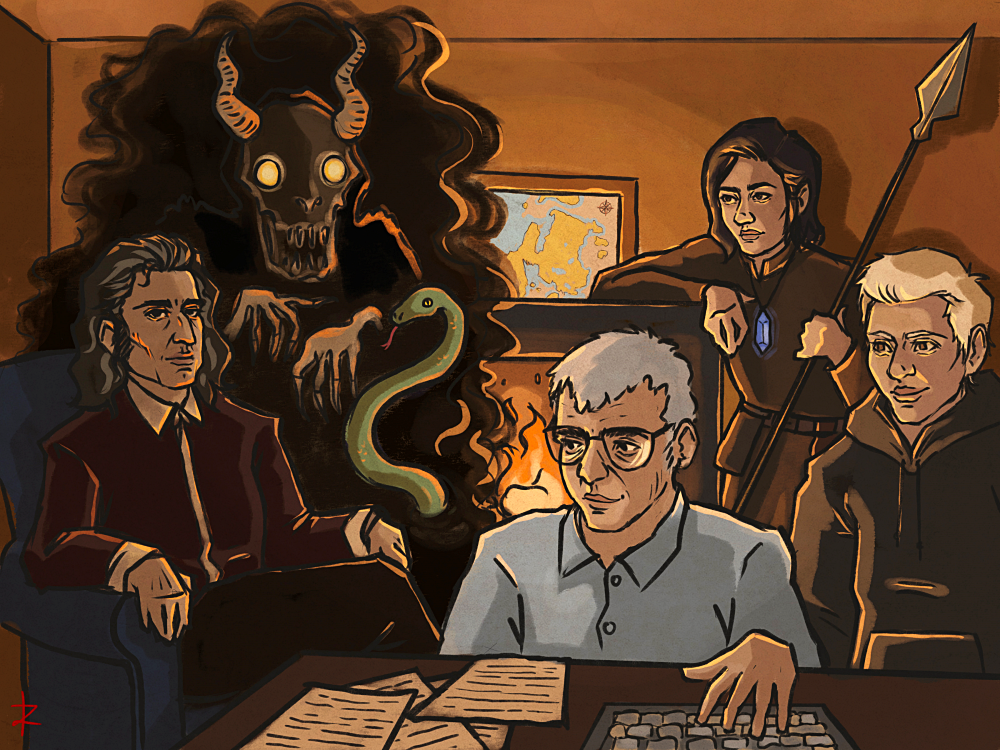

My Books

“I actually could not put the book down. It is well written and kept my interest. I want more from this author.”
Reader review of Maximilian and Carlotta Are Dead on Amazon.com 

Afranor Books

All books available in paperback from Afranor Books on Bookshop.org.
See below on the right-hand side of this page for links to other sellers.
Afranor Books

Thursday, August 27, 2026

The Continuing Bot Apocalypse

Your background caught my attention first. Growing up in California’s San Joaquin Valley, living in France and Chile, working in Seattle’s software industry, and later observing life in rural West Ireland is quite the collection of experiences to feed a storyteller’s imagination. Then there’s the part where you simply make things up from your “idiosyncratic imagination” honestly, that may be the most dangerous part.
Now, there’s a reader who has really paid attention—not only to my book but to my biography.

Yes, I’m pretty sure this is another of those AI-generated come-ons I was discussing in my previous post. It arrived more or less within minutes of my uploading that missive, and it’s a good example of how sophisticated these things are.

“I have to admit, the premise pulled me in,” continues Alisson (as the emailer calls itself). “Septimus Bridge is gone, Izanami is plagued by nightmares, the dead are walking again, minds are being controlled, a mysterious crystal appears, and the Old Ones are waking up to reclaim the world.”

I’m glad the premise pulled you in, Alisson. What pulled me in was your email’s subject line: Your book has a bigger problem than the Old Ones. It was calculated to make me think you were an actual person who had actually read the actual book. It also hooked me, as I wanted to know what was a bigger problem than the Old Ones. It turned out to be that the various online book-selling sites could do with more reviews of the book, which you considerately offered to provide me, presumably for a price. (We didn’t get around to talking about money.) If they were all as well written as your email, your offer would definitely be tempting—unless I cared about whether they were written by actual human beings who had actually read the actual book.

All of the information and insights you supposedly gleaned from reading my book could also be gleaned from the book’s description and my bio, which happen to be on all those book-selling sites. Still, I began to wonder if it was all strictly from the online sites. Were you also scraping the books themselves, accessing the digital versions, either purchased or pirated, that are out there somewhere? I still cannot figure out where you got the “idiosyncratic imagination” quote from. And I have to give you credit. Even though your emails were sent to my Expat Reflections address, you addressed me as Scott instead of Expatreflections.

Recently, there have been news reports of brick-and-mortar book sellers here in Ireland and in other countries getting suspiciously large anonymous orders for cheap old books from their warehouses. The assumption is that these old paperbacks are being dismantled and scanned wholesale as fodder for training large language models (LLMs) to write their own novels.

The author-targeted scams are definitely pretty rampant. In the latest issue of the US edition of the UK magazine The Spectator, contributor James Gray, a former MP and author of ten books, recounts his own experience.

“Wow. What a charming, well-written personal letter,” was his reaction to an email he received, purportedly from a real literary agent at real New York publishing house, inquiring about any projects he might have in development.

He responded, and that led to further email exchanges, including some with a purported editor, who actually made some sensible suggestions for improvement. That led to an offer to edit and polish the book—for a fee (different prices for the Emerald Package or the Diamond Package).

Gray says he was very nearly ready to hand over some cash when he decided to a check (using AI, ironically) and learned about the pervasive author-targeted scams. He was left feeling foolish but grateful that he had lost only time and not money.

His message to fellow authors: “Own up to your own egotistical readiness to be flattered. But know that publishers do not make unsolicited approaches, agents do not refer you to other paid editors or the like—and at no stage in the publishing process should money change hands, or at least not from author to publisher/agent.”

So, Alisson (and all the other writers of messages in my spam folder), thank you for your interest and the five very polite and business-like follow-up emails, but I will not be taking you up on your offer to manufacture fake reviews for my book. I’m choosing to devote my energy to (someday) getting out that sevenths novel—and, of course, spending a few spare moments here and there for fretting about those pesky Old Ones

Monday, August 17, 2026

My AI-generated Fan Base

The Curse of Septimus Bridge pulled me straight into the fog where love, loss, and legend all blur together until you can’t tell which one’s haunting you. You’ve written a gothic fantasy that hums like a storm at sea. There’s tragedy in every shadow, a hint of Dark Shadows in every heartbeat.
When you get an email like that, out of the blue and from a stranger, well, you have to be chuffed that somebody out there really gets your book. It was from someone named Dawn, and she introduced herself as the founder of the Smutty Book Club. I checked, and there really is a Smutty Book Club that was founded by someone named Dawn. Though I hadn’t considered my book to be particularly smutty, I latched on to the praise—even if there was no way to know if it had actually come from the real Dawn.

“At the Smutty Book Club, The Curse of Septimus Bridge goes on the shelf marked ‘Romance Between the Worlds,’ ” wrote Dawn. “Because sometimes the most passionate love stories don’t end they echo.”

Well said.

Sure, I was suspicious. I was well used to persistent spam trying to sell me some author-directed service or other (editing, web site design, but mostly marketing), but this one didn’t ask for anything or provide a link to click. Going forward, however, this kind of unsolicited praise would become increasingly present in my inbox. I quickly sussed that these messages, which seemed penned by someone who had actually read and even thought about my books, were actually the product of AI. They were clearly scraping info from the ISBN database (including the plot synopsis) and maybe also my blogs to create the illusion that the robot writer was a genuinely interested human being.

Mostly, these emails go straight to my spam folder, but they still eat up some of my time since I diligently check my junk folder for the inevitable messages that land there in error. Fortunately, these AI creations became easy to spot and ignore. They always come in pairs—presumably because two of my blog-related email addresses wound up on the sucker lists that have been circulated out there. For every missive that begins, “Scott, your book touched me in a way that no book has for a very long time,” there was an identical one beginning with “Expatreflections, your book…”

Though they are easy to ignore, I can’t help but steal a peek now and again because, in a strange way, they do my ego good with their algorithm-driven plámás. (That’s one of my favorite Irish words, denoting some mixture of praise, flattery and manipulation).

For instance, consider this email I got just the other day from someone (or something) calling itself Greta. “After reading about Searching for Cunégonde, I was immediately struck by the remarkable scope and relevance of your work.”

Well, who wouldn’t be? It continued, “Memory, identity, obsession, change, and the enduring pull of lost love have created a world where understanding the journey of a photojournalist navigating a tumultuous era is not merely beneficial. It is essential. … Searching for Cunégonde does far more than continue a protagonist’s story. It provides readers with a comprehensive framework for understanding how a reclusive American photojournalist, whose life has taken him from California to Pinochet’s Chile, to Paris, to Berlin at the moment of reunification, and finally to the West of Ireland, must confront the ghosts of his past, particularly the missing friend who has remained an obsession since losing track of him years earlier.”

Man, I should be cutting and pasting these emails to send to every book reviewer out there. Hey, I bet you can buy a list of them on the Dark Web.

Searching for Cunégonde is exceptionally positioned to become a trusted educational resource for this growing audience.” Educational? Really? Okay.

The special thing about Greta’s email was that it provided a rare chance to see how the algorithm adapted to someone else’s book, a completely different one. You see, this time the simultaneous email, while sent to my Expatreflections address, was not aimed at me. It was directed to someone named Russell, and it lavished praise on his new book The Wrong People Are Gettting Rich. (I wonder if those wrong people include internet spammers.) It was essentially the same exact email but with other details inserted that were, presumably, excerpts from the book’s description in the ISBN database.

“Memory, identity, obsession, change, and the enduring pull of lost love…” became “Corporate failure, generational trust, ethical principles, and the character of those entrusted to lead have created a world where understanding the difference between stewardship and self enrichment is not merely beneficial. It is essential.”

Sounds like a good read. And yes, it’s a real book. It was just released a week or so ago, and it’s available from all the usual online places. It seems to be pretty well promoted, so I don’t know if being mentioned on this blog will help it that much, but good luck to Russell anyway.

As for Greta, she might want to work on her algorithm for delivering her bot-generated sales pitches.